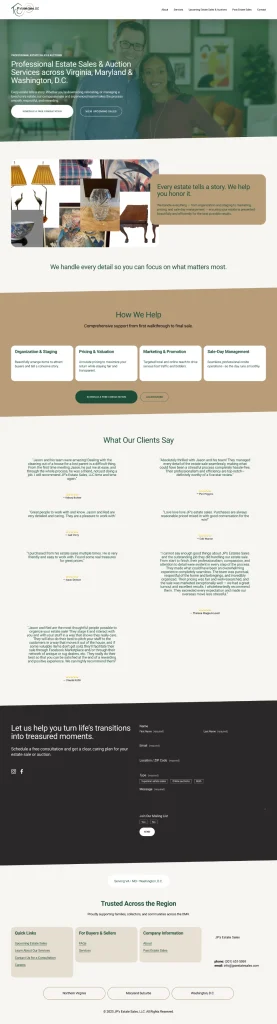
JP’s Estate Sales needed its own website to explain its services, showcase past work, and capture inquiries. The founders also needed a setup they could maintain without technical support for every update.
I organized their content, selected and configured Squarespace, designed their logo, connected lead capture, and set up branded email. I tested the visitor and communication workflows, then provided training and support around the launch.
Project: Client work
Launched
My role: Client discovery, platform selection, content organization, website setup, logo design, image editing, domain and email configuration, manual testing, and client training.
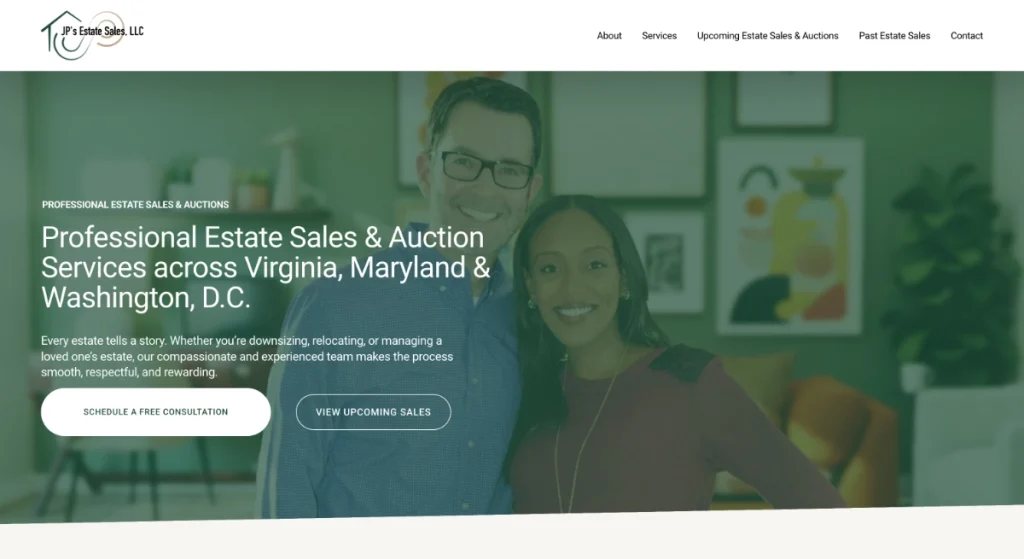
Delivered at a glance
The website launched on time for a planned marketing campaign with a partner.
The delivery included a website, logo, branded email, lead capture connected to Google Sheets, and a QR code for use at physical estate sales.
I recorded a 30-minute onboarding video and provided two weeks of additional support after the campaign went live. Lead volume and revenue impact were not measured as part of this project.
Discovery: Serve prospective clients and sale attendees
The website needed to support two related audiences.
Prospective clients needed to understand the estate sale and auction services, see evidence of previous work, and request a free consultation. People interested in attending sales needed a way to find upcoming events and join the mailing list.
The project also required foundations beyond the public pages: a domain, branded email, a consistent visual identity, and a reliable way to record inquiries.
I used those needs to guide the site structure and the supporting setup.
Platform choice: Make ongoing maintenance practical
I chose Squarespace because the client was nontechnical and needed a visual, straightforward way to maintain the website.
The platform decision accounted for what would happen after launch. The founders needed to update information and present future sales without depending on me for routine changes.
Squarespace provided the website and hosting, while its native Google Sheets integration supported the form-recording workflow.
Content structure: Turn one document into a website
The client supplied the copy in a single Google Doc. It contained the material we needed, but it was not organized for web pages.
I first separated the content into sections based on intent: what a visitor needed to understand, what would help establish trust, and what action they could take next. I then grouped related sections into pages.
Within each page, I broke longer passages into smaller blocks. Cards, columns, headings, and color helped distinguish topics and make the information easier to skim.
Make the services easy to compare
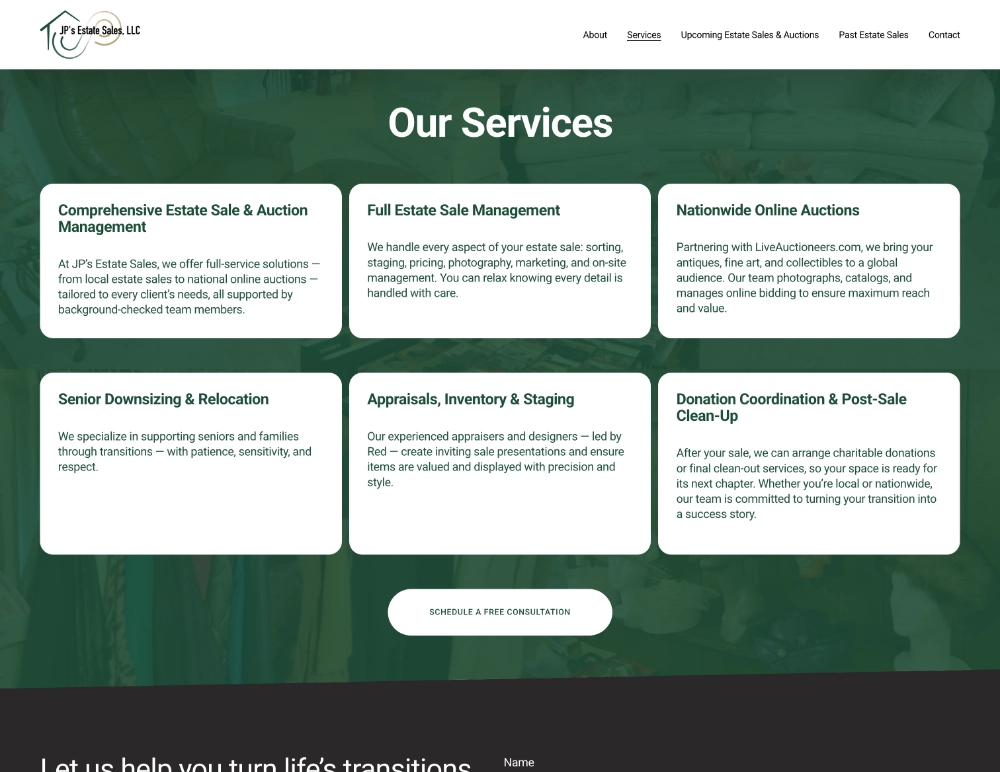
The Services page presents the offerings in individual cards, giving visitors a way to scan the range of support before requesting a consultation.
This translated dense source material into a more accessible overview while keeping the client’s services visible.
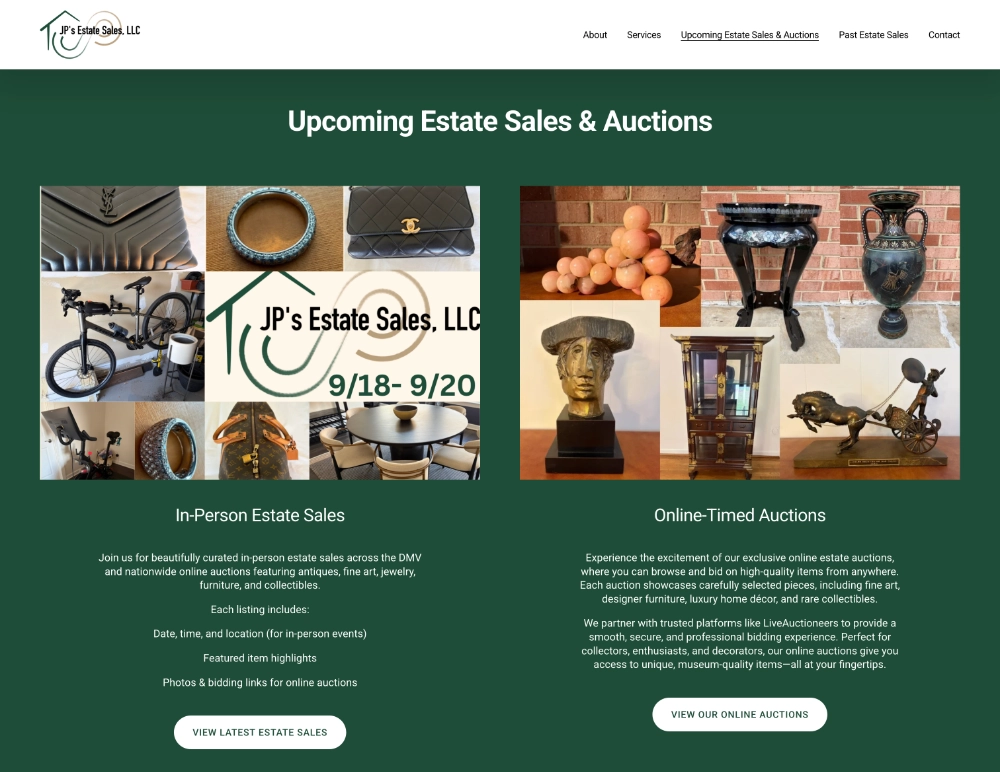
Separate in-person sales from online auctions
The Upcoming Estate Sales & Auctions page gives each format its own explanation and destination link.
That structure helps visitors choose the relevant path while retaining access to the consultation form.
Show the breadth of previous work
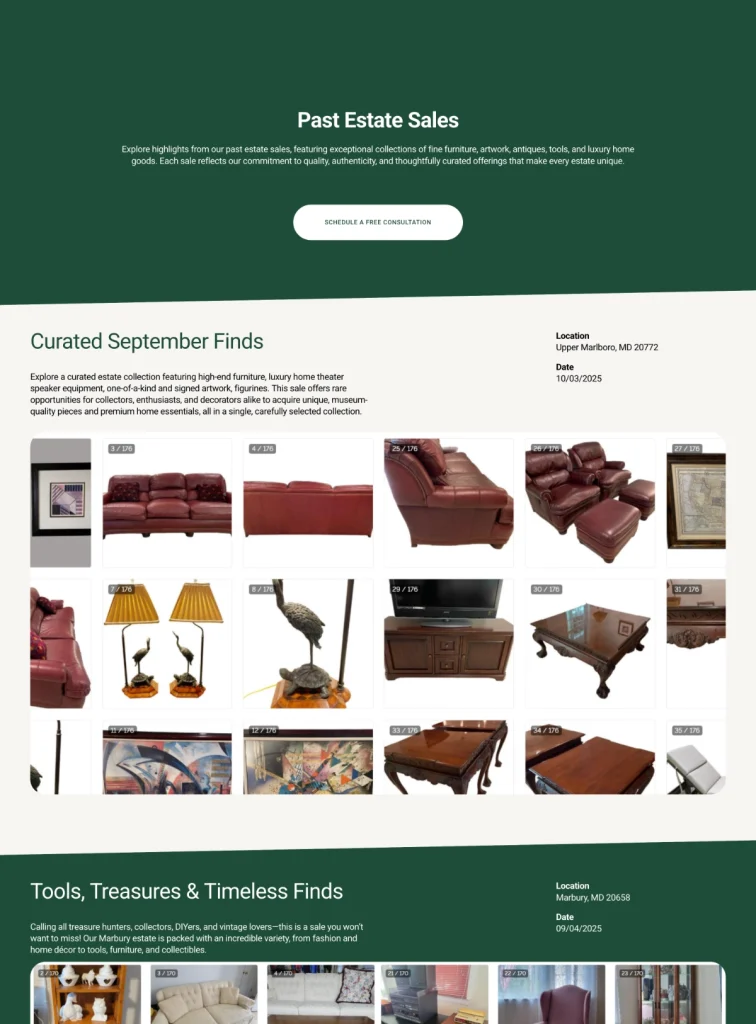
Past sales were an important part of explaining what the business delivers.
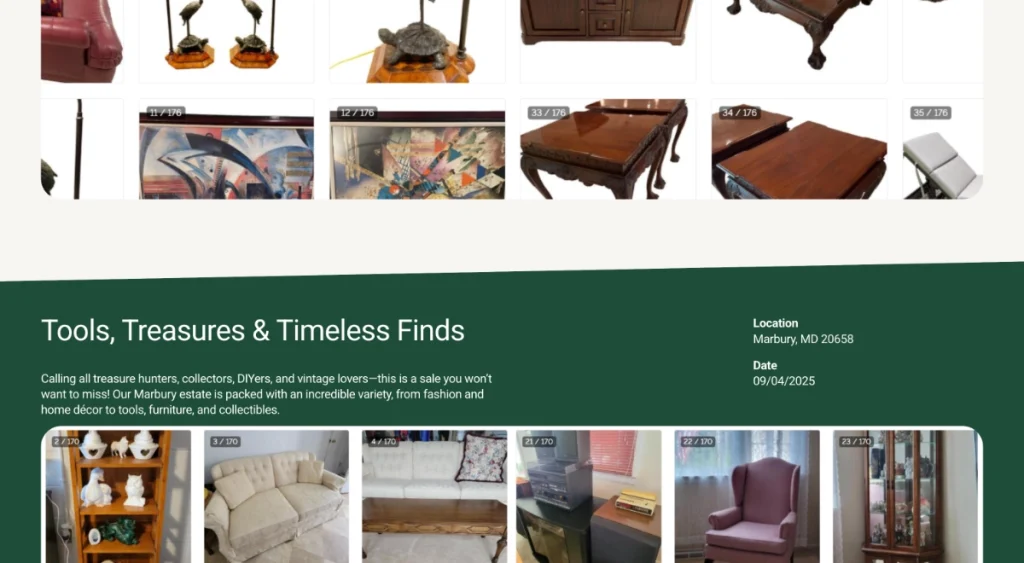
I assembled gallery screenshots from the client’s previous sales and auctions on third-party platforms. These showed the range and volume of items involved, helping visitors see the scope of the client’s work.
The Past Estate Sales page combines those galleries with brief descriptions and sale details.
Branding and image preparation
Develop a logo with a connection to the business
I presented three logo concepts and explained the reasoning behind my preferred direction.
The selected concept combines the J and P into an infinity-inspired form, expressing the idea of estate items continuing into a new life. The client chose that direction for the final identity.
I also checked the logo’s appearance and cropping on the website and across social platforms.
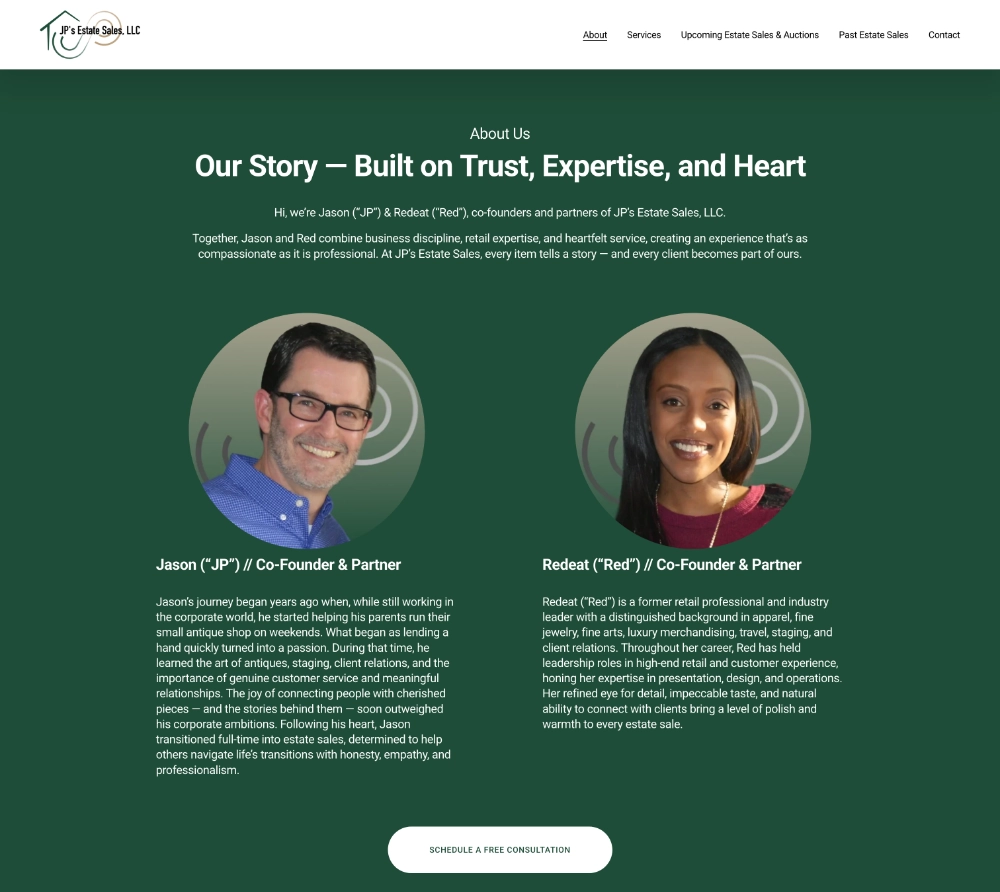
Prepare founder portraits from existing photography
The founders supplied a high-quality casual photograph rather than individual studio headshots.
Using Affinity Photo, I cropped separate portraits and made corrections to prepare them for the About page. This gave the founders usable portraits without making a new photo shoot a dependency for launch.
Lead capture: Connect the website to the client’s follow-up process
The consultation form captures the visitor’s contact information, location, service interest, and message, with an option to join the mailing list.
I connected the forms to Google Sheets through Squarespace’s native integration. During testing, I checked that submissions were recorded and that the originating page was reflected correctly in the sheet.
I also created a QR code that the client could use at physical estate sales to take visitors directly to the lead capture form.

Testing: Follow the inquiry beyond the submit button
I tested the website and its supporting communication workflows before launch.
My checks included:
- Navigation links, external destinations, and page anchors.
- Consultation and mailing-list submissions.
- Submission records and source-page information in Google Sheets.
- Email delivery to the intended recipients.
- The QR code’s destination and access to the lead capture form.
- Website presentation on desktop and mobile.
- Logo quality and cropping across the website and social platforms.
Investigate messages arriving in spam
During testing, automatic responses and sent messages were arriving in spam folders.
I configured SPF, DKIM, and DMARC for the domain, then repeated the email tests. In those follow-up tests, the messages arrived in the inbox.
I also configured each founder’s email signature, tested messages sent from their accounts, and provided screenshots so they could review how the signatures appeared to recipients.
The testing covered whether inquiries were recorded and messages received, as well as whether the form appeared to submit successfully.
Protect the launch date as content arrived late
Delays in receiving copy and images created a risk to the planned launch.
I confirmed the latest date I would need the remaining content and maintained communication about milestones, progress, and whether we were still on pace.
I also offered additional help with image sourcing, screenshots, and founder headshot preparation as separately priced work. This gave the client an option for resolving asset gaps while keeping the launch moving.
The approach made the dependencies clear and gave us practical ways to address them.
Handoff: Give the client a way to keep going
I recorded a 30-minute onboarding video explaining how to update and maintain the website.
The video gave the founders a reference they could return to after handoff. I also provided two weeks of additional support after their partner marketing campaign went live, allowing time for quick fixes or adjustments if needed.
Maintainability was part of the original platform decision, and training completed that handoff.
Tools and implementation
| Tool / platform | Purpose |
|---|---|
| Squarespace | Website creation, hosting, and forms |
| Squarespace’s native Google Sheets integration | Recording form submissions in Google Sheets |
| Google Sheets | Reviewing captured inquiries and signup records |
| Google Workspace | Branded business email |
| Bluehost | Domain registration and DNS management |
| Affinity Photo | Founder portrait preparation and image editing |
Outcome and what I learned
JP’s Estate Sales launched its website on time for the planned partner marketing campaign.
The project delivered a place to explain services, showcase previous sales, and receive inquiries, together with the email setup, submission records, and training needed to support its use.
The work reinforced how much a website delivery depends on the connections around it. Clear content needs an appropriate page structure. A submitted form needs a usable record and a received notification. A maintainable platform needs a handoff the client can follow.
I did not measure changes in leads or revenue. The demonstrated outcome is the completed launch, tested workflows, and a supported handoff to the client.
View the full JP’s Estate Sales homepage.